
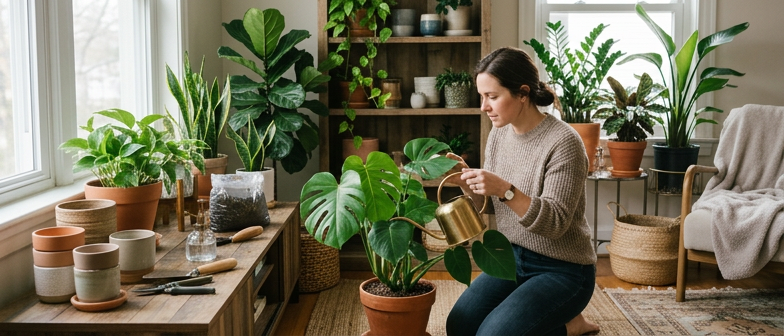
Getting Started with a Home Plant Care Schedule
A simple Home Plant Care Schedule helps you remember regular tasks instead of waiting until a plant looks stressed. As a beginner, use a Houseplant Care Calendar as a flexible guide, not strict rules. Start by noting weekly times to check soil moisture, scan for yellowing leaves, and confirm each plant still has suitable light. Over time, you will see how different plants dry out, how fast they grow, and which ones need more attention, so the beginner houseplant guide you follow becomes a familiar routine instead of a guessing game.
When you set up your first schedule, begin with a short list of plants and just a few recurring checks so the calendar stays simple. Group tasks that fit your week, such as a quick morning walk to spot drooping plants and a slightly longer weekend review to rotate pots, trim damaged leaves, or adjust where they sit for light. Your aim is to build a pattern you can repeat and refine, keeping the schedule flexible enough to match each plant’s needs and your daily life.
Watering Indoor Plants on a Consistent Routine
A basic Home Plant Care Schedule for watering starts with observation rather than fixed dates. Instead of watering every plant on the same day, plan a weekly moisture check as part of your Beginner Houseplant Guide. Press a finger into the potting mix about an inch deep to feel whether it is dry, lightly damp, or wet. Walk through your space once or twice a week, test the soil in each pot, and notice which plants dry out faster. This simple habit creates a consistent routine that still responds to what each plant needs.
Group plants in your Indoor Plant Watering plan according to how quickly they use water. Soft, thin leaves often belong to plants that like evenly moist soil, while succulents and cacti usually need the mix to dry out between waterings. Larger pots and plants in lower light stay damp longer than small containers in bright light. When you water, pour slowly until excess drains from the bottom of the pot, then empty saucers so roots are not sitting in standing water. Adjust how often you check each group based on how fast the soil dries after watering.
Keep your watering schedule flexible and update your Houseplant Care Calendar as seasons change. Indoor plants usually need less water in cooler, darker months and more when light and indoor temperatures rise. Use room temperature water and keep your routine steady to avoid sudden swings in moisture. Watch for early signs of stress, such as yellowing leaves from staying too wet or crispy edges from drying out, and tweak your checks and watering frequency to match what you see.
| Typical Indoor Plant Type | Suggested Moisture Check Routine | Likely Watering Frequency Range | Key Warning Sign | Adjustment Tip |
|---|---|---|---|---|
| Succulents and cacti | Finger test weekly | Infrequent, after soil fully dries | Soft or yellowing stems | Reduce watering and extend dry periods |
| Tropical foliage with soft leaves | Finger test twice weekly | Moderate, when top layer feels dry | Drooping or crispy leaf edges | Increase checks and keep soil lightly moist |
| Large floor plants in low light | Finger test weekly | Less frequent, soil stays damp longer | Yellowing leaves or mushy roots | Lengthen time between waterings |
| Small pots in bright indirect light | Finger test two to three times weekly | More frequent, dries quickly | Wilting or dry, brittle leaves | Shorten gaps between waterings |
| Mixed collection on one shelf | Brief walk-through moisture scan | Varied by plant group | Several plants showing stress at once | Create separate care groups with tailored checks |
Weekly and Monthly Watering Checks
In a simple Houseplant Care Calendar, weekly watering checks keep you from guessing. Once a week, test soil moisture with your finger or a probe an inch or two below the surface instead of judging by the dry top layer. Notice how fast each pot dries; plants in brighter light, smaller containers, or warmer rooms usually need more frequent indoor plant watering than those kept cooler or in lower light.
Monthly reviews in your Home Plant Care Schedule help you catch stress early and adjust watering with the seasons. Look for yellow leaves and soft, mushy stems as signs of excess water, and for dry, brittle foliage or soil shrinking from the pot when plants are too dry. As day length and indoor temperature shift, update how often you water and note these changes on your houseplant care calendar.
Planning Light Placement for Indoor Plants
Light is a core part of any Home Plant Care Schedule, and placing each indoor plant in the right spot helps it grow steadily. Beginners often hear low, medium, and bright indirect light. Low light means several feet from a window in a dim room where you can still read but there are no strong sunbeams. Medium light is a brighter space closer to a window or with open shades for most of the day. Bright indirect light describes areas near a window where sun is softened by sheer curtains or reflected off walls so plants get strong illumination without harsh rays burning their leaves.
For a simple Beginner Houseplant Guide, match these light levels with typical window directions. North-facing windows give soft, steady light suited to low or medium light plants. East-facing windows offer gentle morning sun, ideal for many houseplants that like bright but mild conditions. South and west windows bring stronger light that suits brightness-loving species if you pull pots back from the glass or use curtains to turn direct sun into safer indirect light. In homes with few windows, placing plants on shelves or counters within a few feet of the brightest window usually boosts light without cluttering the room.
To make Plant Light Placement part of a regular home plant care routine, check positions every few weeks. If a plant stretches toward the window, loses its rich color, or shows scorched leaf patches, adjust how much light it receives. Rotate pots to keep growth even, move light-hungry plants closer to bright windows in winter, and slide sensitive ones farther back in intense summer sun. This simple Houseplant Care Calendar approach keeps each plant matched to the best light it can get indoors.
Seasonal Light Adjustments in the Home
As daylight shifts through the year, the light patterns inside your home change, so thoughtful plant light placement should be part of your Houseplant Care Calendar. In winter, the sun sits lower and days are shorter, so many indoor plants benefit from moving closer to bright windows or from opening blinds fully around midday. In summer, light is stronger and more direct, and sensitive plants may need to be pulled back from south or west windows or protected with sheer curtains to avoid leaf scorch. A simple seasonal review of each room’s light in early spring and early fall helps you decide when to rotate pots, shift plants between rooms, or switch on grow lights to keep conditions steady.
Indoor Plant Potting Basics and Repotting Timelines
A reliable home plant care schedule starts with indoor plant potting basics. Use containers with drainage holes so excess water can escape and roots do not sit in soggy soil. Place a saucer under the pot to protect surfaces and empty it if water remains. For a beginner houseplant guide, breathable plastic or unglazed clay pots sized to the current root ball work well. Choose a potting mix labeled for indoor plants instead of dense garden soil. Most houseplants grow better in a light mix that holds moisture yet keeps air around the roots, supporting regular indoor watering and light routines.
Link potting habits to your houseplant care calendar by checking root health once or twice a year, often in spring and late summer when growth is strongest. During these reviews, look for roots circling the bottom, pushing through drainage holes, or forming a tight mat on the soil surface; these signs suggest you should shift to a slightly larger pot. Repotting also lets you refresh tired mix, trim dead roots, and inspect for pests. Not every plant needs repotting on a fixed date, so treat the calendar as a reminder to inspect conditions and keep pot size, soil quality, and roots in balance.
Q&A
-
How do I start a simple home plant care schedule as a beginner?
List your plants, then pick one or two regular check‑in days each week. On those days, quickly review soil moisture, leaf color, and light for each plant and note what you adjust. -
What is a practical way to handle indoor plant watering without overdoing it?
Skip fixed watering dates. Instead, once or twice a week press a finger about an inch into the potting mix. Water only the plants whose soil feels dry rather than damp. -
How can I decide where to place plants for the right amount of light?
Use the room as a guide: low light is several feet from windows in dim areas, medium is closer to open windows, and bright indirect is near sunny windows filtered by sheer curtains. -
What should my basic houseplant care calendar include for repotting?
Plan a quick root and pot check every spring. If roots circle the pot or grow through drainage holes, move the plant into a slightly larger container with fresh indoor potting mix. -
How often should I clean indoor plant leaves as part of my routine?
Every month, wipe dust from leaves with a soft, slightly damp cloth. This keeps light reaching the leaf surface and helps you spot pests or damage early.