
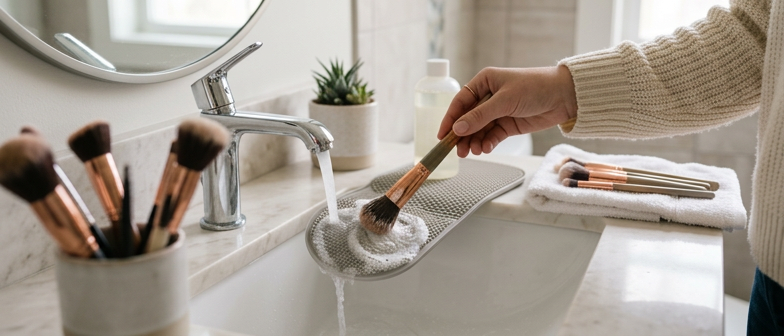
Why Makeup Brush Cleaning Matters
Regular makeup brush cleaning is a key part of basic brush care because each use leaves behind product, skin oils, and everyday debris. Over time, this buildup can transfer back onto the face and may contribute to clogged pores or irritation, especially for people who are prone to breakouts or sensitivity. Cleaning does not guarantee clear skin, but it removes one recurring source of grime. Freshly washed brushes also tend to apply makeup more evenly, because the bristles are not weighed down with old foundation or powder that can make blending streaky.
Consistent care also affects how long your tools remain usable. When brushes are not cleaned often enough, residues can dry at the base of the bristles and make them stiff, which can lead to fraying, shedding, or loss of shape. Very aggressive washing or harsh cleansers can also wear down the fibers and the glue that holds them in place. Finding a realistic cleaning routine is about balancing hygiene, makeup performance, and the time you have. Many people clean frequently used face brushes about once a week and wash eye brushes regularly, then adjust based on how often they wear makeup and how their skin responds.
How Often to Clean Different Types of Brushes
How often you clean your makeup brushes depends on what they are used for, how frequently you wear makeup, and how your skin reacts. Brushes that touch liquid or cream products, such as foundation, concealer, cream blush, and contour, need the most frequent care because moist formulas build up quickly. Many people wash these face brushes about once a week to clear leftover makeup, oil, and daily debris, while those with easily irritated or acne‑prone skin may prefer quick washes even more often. Eye brushes used for shadow, liner, and brows also benefit from regular washing, especially when you use strong pigments or switch shades. A gentle clean roughly weekly, with light spot‑cleaning between colors, can reduce product transfer.
Brushes used only with dry powders on larger areas of the face, such as setting powder, bronzer, and finishing brushes, usually do not need cleaning as often as liquid or cream tools. Many users wash these every one to two weeks, adjusting based on how much product they see on the bristles and whether application starts to look patchy. If you wear makeup only occasionally, it can be practical to wash all brushes after several uses instead of following a strict schedule, as long as they are not visibly dirty or affecting results. The most important part of makeup brush care is consistency and paying attention to how clean bristles look, feel, and perform on your skin.
| Brush or Tool Type | Typical Products Used | Suggested Cleaning Frequency | Why This Timing | Extra Care Notes |
|---|---|---|---|---|
| Liquid and cream face brushes | Foundation, concealer, cream blush, contour | About weekly or more often | Moist formulas build up quickly | Increase frequency for easily irritated skin |
| Powder face brushes | Setting powder, bronzer, finishing powder | Every one to two weeks | Dry powders cling less than creams | Clean sooner if application looks patchy |
| Eye shadow brushes | Neutral and soft shadows | Roughly weekly | Regular use leaves pigment and oils | Spot clean when switching shades |
| Detail eye and brow brushes | Deep pigments, liner, brow products | Frequent light cleaning | Intense colors transfer between uses | Wipe after strong or dark shades |
| Occasionally used brushes | Any face or eye products | After several uses | Less daily buildup from rare wear | Do not wait if bristles look or feel coated |
Signs Your Brushes Need More Frequent Cleaning
When brushes start to feel stiff, scratchy, or less smooth on the skin, old makeup and skin oils are likely building up in the bristles. If a brush suddenly blends poorly or behaves differently from when it was freshly washed, even with the same products, your current cleaning routine may not match how often you use it.
Changes in appearance or smell are also warning signs. Bristles that look darker at the base, clump together, shed more, or leave streaky, uneven color usually hold trapped residue. A musty or sour odor, or more breakouts and irritation where the brush is used, suggests it should be cleaned more often.
Step-by-Step Guide to Washing and Rinsing Brushes
Begin by gathering lukewarm water, a mild liquid soap or brush cleanser, and a clean towel so Makeup Brush Cleaning stays quick and gentle. Hold the brush with the bristles pointing downward and wet only the tips under running water. Avoid soaking the metal ferrule or handle, because water trapped in these areas can loosen glue and shorten the life of the brush. Place a small drop of cleanser in your palm or on a cleaning mat, then swirl the damp bristles in light circles so the product works through the hairs without splaying or sharply bending them.
When the makeup is loosened, focus on careful rinsing. Keep the bristles facing down and run lukewarm water over them while you gently massage from the base of the hairs toward the tips. Continue until the water runs clear and no visible soap or pigment remains, because residue from incomplete washing can cause buildup and uneven application. Avoid very hot water and strong twisting motions, which can damage both natural and synthetic fibers and may lead to shedding or fraying.
After rinsing, gently squeeze out excess water with your fingers and press the bristles between a clean towel to remove more moisture without pulling. Reshape the brush head so it dries in its original form, since distorted bristles make precise application harder. Lay brushes flat on a towel with the heads slightly elevated and the handles lower, allowing water to drain away from the ferrule. This simple washing and rinsing routine supports basic Makeup Brush Care, but deep stains may remain, and brushes that keep shedding or feel rough after cleaning may need to be replaced rather than scrubbed more aggressively.
Recommended Cleansers and What to Avoid
For regular makeup brush care, use mild cleansers that remove oils and pigment without stripping the bristles. Gentle liquid face washes, fragrance free baby shampoos, or products made for brush washing are common choices. Look for formulas that are sulfate free, low fragrance, and easy to rinse, especially if your skin is sensitive or you have had irritation before.
Avoid harsh products that can damage bristles or irritate skin. Strong household detergents, surface sprays, high alcohol solutions, and very gritty scrubs can dry natural hair, weaken glue at the ferrule, and roughen synthetic fibers. Bar soaps with a coarse texture or cleansers that smell strongly chemical, feel extremely drying, or leave residue after rinsing are usually not suitable for routine brush cleaning.
Drying and Storing Brushes Safely
Drying is a key part of overall makeup brush care. After rinsing away cleanser, gently squeeze out excess water with a clean towel and reshape the brush head so it keeps its original form. Lay brushes flat on a towel with the bristles slightly over the edge of a counter to allow air to circulate. Avoid placing brushes upright with the bristles facing up, because water can run into the ferrule, weaken the glue that holds the hairs, and shorten the life of the brush.
Let brushes dry in a well ventilated area, away from hair dryers, radiators, or strong direct sunlight. High heat can damage both natural and synthetic fibers, making them rough, brittle, and more likely to shed. Drying can take several hours or overnight, especially for dense face brushes, so plan cleaning for a time when you will not need them immediately. If a brush still feels damp at the base of the bristles, give it more time before putting it away to reduce trapped moisture and musty odor.
Once brushes are completely dry, careful storage helps keep them clean between uses. Many people keep them upright in a cup or organizer with enough room so the heads are not crushed together. A closed drawer, roll up case, or covered holder can reduce dust and contact with spilled products, but brushes should always go in fully dry. Periodically checking and cleaning the storage container supports long term hygiene and makes tools easier to use.
Q&A
-
Why does cleaning makeup brushes regularly matter?
Each use leaves makeup, oil, and debris in the bristles. Washing reduces buildup that may clog pores or irritate skin and usually helps foundation, powder, and eye shadow apply more evenly. -
How often should I wash brushes used with liquid or cream products?
Many people clean foundation and concealer brushes about once a week, or more often if they have sensitive or acne‑prone skin or wear makeup every day. Heavy use or long‑wear formulas may need even more frequent washing. -
What is a simple way to wash and rinse brushes safely?
Hold the bristles downward under lukewarm water, work in a small amount of gentle soap or brush cleanser, then rinse until the water runs clear. Keep water away from the ferrule and handle and avoid harsh scrubbing or twisting. -
Which cleansers are suitable for washing, and what should I avoid?
Mild liquid face wash, fragrance‑free baby shampoo, or dedicated brush cleansers are commonly used. Avoid very strong detergents, high‑alcohol products for deep cleaning, and products that leave heavy residue or strong fragrance on the bristles. -
How should I dry and store brushes after rinsing?
Gently press out extra water, reshape the bristles, and lay brushes flat with the heads slightly over the counter edge to air‑dry. Once fully dry, store them in a clean, dry container with the bristles open to air, not sealed while damp.