
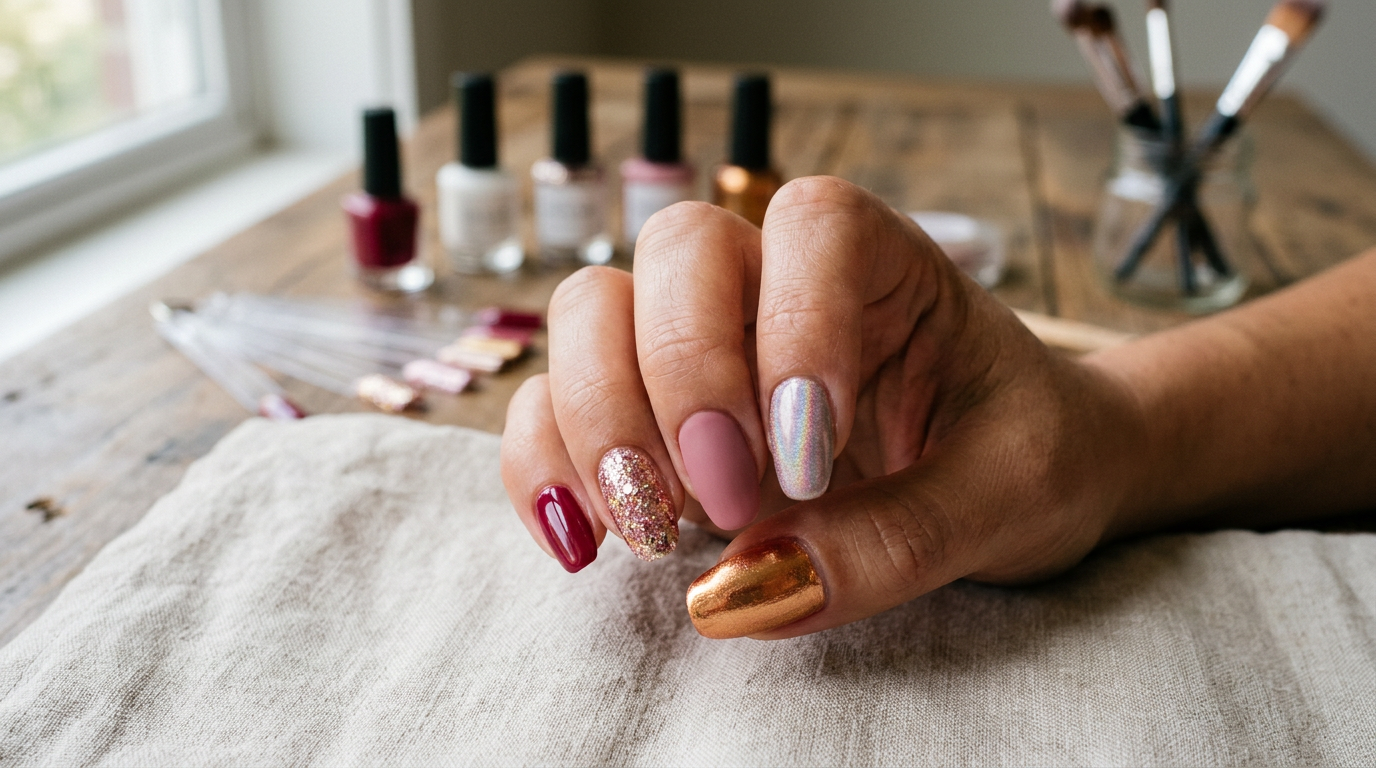
What Nail Polish Finishes Are and Why They Matter
People often focus on nail polish color, but the finish is just as important. A finish describes the surface look and texture once the polish dries, from high shine to completely flat or softly reflective. The same red shade can look glossy, matte, sheer, shimmery, metallic, or glittery, and each option changes how light hits the nails and how much natural texture or ridges are visible.
Knowing the main types of finishes helps you match a manicure to your style, habits, and nail condition. Someone who wants low-maintenance nails may choose a sheer or subtle shimmer that makes chips and growth lines less obvious, while a bold look might involve a high-gloss, metallic, or glitter-heavy polish for events. Some finishes can visually smooth and elongate the nails, and others highlight designs or stamping. By understanding how each finish looks and typically wears over time, you can pick polishes that align with your workplace, comfort level, and the amount of upkeep you want.
Classic Cream and Glossy Finishes
Among the many nail polish finishes, classic cream and glossy options are the most familiar and versatile. A cream finish is usually an opaque color with no shimmer, glitter, or noticeable texture, creating a smooth, even layer that emphasizes the natural shape of the nail rather than special effects. Paired with a high-shine top coat, this becomes the traditional glossy nail polish look, similar to polished glass or plastic. These finishes appear in a wide range of shades, from soft neutrals and sheer pinks to bold reds and deep blues, so they can suit office settings, casual wear, or formal events without feeling extreme or highly trend driven.
In everyday use, glossy cream formulas are often chosen for straightforward application and predictable wear. Many are designed to level out as they dry, which helps reduce the appearance of brush strokes when applied in thin, even coats. A separate glossy top coat can enhance shine and add some protection against minor surface scratches, though overall durability still depends on nail preparation, daily activities, and how often hands contact water or cleaning products. These simple finishes also work well as a base for nail art, including shimmer or glitter layers, because the flat surface makes additional products easier to apply and later remove. They do not prevent natural issues such as peeling or breakage and can chip under heavy use, but they provide a clear, low-complexity option for exploring different nail polish finishes.
| Finish type | Shine level | Opacity | Ease of application | Typical use |
|---|---|---|---|---|
| Cream glossy | High | Medium to high | Easy | Office, everyday, formal |
| Matte | Low | Medium to high | Needs careful strokes | Modern, understated looks |
| Sheer | Soft shine | Low to medium | Moderate, best in thin layers | Natural look, subtle tint |
| Shimmer | Soft to high sparkle | Medium | Moderate | Layering over creams, evening wear |
| Metallic | High reflective | Medium to high | Can show brush lines | Accent nails, bold designs |
| Glitter | Varies, often high | Buildable | Trickier, uneven texture | Party looks, statement nails |
Glossy Nail Polish in Everyday Use
In daily wear, glossy nail polish has a smooth, reflective surface that makes colors look brighter and more saturated. Indoor lighting gives a sleek, groomed effect, while natural light can reveal subtle shifts in tone and also highlight ridges or other imperfections. Because the surface is shiny, fingerprints, lotion marks, and small scratches tend to be more noticeable, so some people lightly wipe the nails to keep them looking even.
A shiny manicure is often considered suitable for both casual and professional settings, ranging from soft neutrals to vivid hues. The same reflective quality that makes it stand out also emphasizes chips at the tips as typing, handwashing, and other tasks wear the polish. Using a base coat and refreshing a thin top coat every few days can help the manicure last, depending on nail condition, formula, and exposure to water or cleaning products.
Modern Textured Looks: Matte, Sheer, and Shimmer
Among contemporary nail polish finishes, matte formulas are some of the most distinctive. Instead of the reflective shine of a classic glossy nail polish, a matte product dries to a flat, velvety surface that absorbs light and emphasizes the natural nail shape. Dark or bold shades can look more understated this way, but application is less forgiving because brushstrokes, chips, and dry spots stand out. Many people experiment by using a matte top coat over regular colors rather than buying separate matte versions. These manicures often show tip wear quickly, so they suit those comfortable with frequent touch ups or a slightly worn look.
Sheer nail polish provides a translucent wash of color that lets the natural nail remain visible. It is common for everyday or workplace friendly manicures and for subtle “your nails but better” styles. The lower pigment can make streaks noticeable after the first coat, but additional thin layers usually even out the finish while keeping it light. Sheer colors can soften the appearance of minor surface irregularities, although strong staining or deep ridges may still show. Because the contrast between polish and bare nail is gentle, new growth and small chips tend to be less obvious, which can reduce the need for frequent maintenance.
Shimmer finishes sit between subtle and bold, using fine reflective particles in a colored base to create a soft glow across the nail. Unlike glitter, which relies on larger, more textured pieces, shimmer usually feels smooth and can typically be removed with standard nail polish remover. Changes in lighting can alter how intense the effect appears, so a shade may look modest indoors yet more radiant in sunlight or under bright artificial light. Applying thin, even coats helps distribute the particles and minimize visible brush lines, making this finish suitable for both special occasions and more restrained looks, depending on color choice.
Working With Sheer and Shimmer Layers
Sheer nail polish is meant to stay translucent, so the natural nail and free edge usually show through even after several coats. The fluid, lightly pigmented formula works best in thin layers, building coverage gradually. Because streaks and uneven patches are common if coats are rushed, it helps to let each layer dry and use light, steady strokes. Removal is typically simple with regular nail polish remover, although any staining depends on the specific shade and how long it was worn.
Shimmer polishes also build in layers, adding depth and reflective particles rather than instant opacity. Some remain delicate and semi‑transparent, while others approach full coverage after a few coats, so the first layer gives a good idea of the final result. Visible brush strokes can appear if the polish is overworked, so a smooth final layer is useful. Standard remover usually takes off shimmer, but a gentle soak‑and‑wipe technique helps keep leftover particles from spreading onto surrounding skin.
Statement Finishes: Metallic and Glitter
Metallic nail polish is designed to mimic metals like chrome, steel, or gold, giving nails a reflective, high-impact sheen. Fine pigments create a smooth, uniform surface that can look almost mirrored under bright light. Because this finish emphasizes texture, ridges or other imperfections in the nail may be more visible, so some people use a ridge-filling base coat. Metallic shades are often chosen for accent nails, geometric designs, or seasonal looks, as they stand out more than standard glossy creams. Removal is usually manageable with regular nail polish remover, but deeper or very pigmented colors can leave temporary staining on nails or surrounding skin, especially if a base coat is skipped or the polish is worn for a long time.
Glitter nail polish suspends reflective particles in a clear or colored base to create a multidimensional effect. The particles can be fine or chunky, and the polish can be worn alone for a textured, opaque surface or layered over sheer or matte colors to add sparkle. Several coats may feel slightly rough and can sometimes catch on fabric. Removal generally takes more effort than with metallic or shimmer finishes, because the glitter grips firmly to the base layer and may need longer contact with remover or the use of a peel-off base to reduce scraping. People often choose dense glitter for parties, holidays, or concerts, or use small amounts on a single finger or nail tip for a more restrained look, usually over a protective base coat to limit dryness or staining.
Q&A
-
What is a nail polish finish, and why is it important?
It is the final look and texture of the dried polish, such as shiny, flat, sparkling, or sheer. It changes how light reflects, how much nail texture shows, and whether the style feels subtle or bold. -
What is the difference between a glossy look and a cream polish?
A cream is an opaque, smooth color without shimmer or texture. Glossy describes a high-shine surface, usually helped by top coat. Cream, shimmer, or metallic shades can all be made glossy. -
When might a matte finish be a good option?
It suits people who prefer low shine and a modern effect. Matte can soften dark shades, but chips, smudges, and uneven areas tend to be more visible than with a glossy surface. -
What should I keep in mind with sheer and shimmer polish?
Sheer formulas remain partly transparent so the natural nail shows. Shimmer uses fine reflective particles. Both usually look smoother in several thin coats; rushing can cause streaks or patchy areas. -
How do metallic and glitter finishes compare, especially for removal?
Metallics resemble smooth metal and can highlight ridges. Glitter suspends visible particles that feel textured. Regular remover often works for metallics, while glitter may need longer soaking and gentle pressure.