What Scene Composition Does in a Film
Scene composition is the set of choices that determine what the audience sees and how they feel about it, forming the core of film scene composition basics. Every frame is arranged to support visual storytelling, turning a simple moment into a clear, readable piece of narrative. By deciding where characters stand, how objects are placed, and what fills the foreground and background, filmmakers tell viewers where to look and what to care about. Even small decisions, such as how much empty space surrounds a character or how balanced a frame feels, can suggest tension, intimacy, isolation, or control without a single line of dialogue.
Framing, blocking, and lighting work together to shape this experience. Framing and shot choices decide how close we are to the action and which details the camera emphasizes, forming a basic visual grammar for the story. Blocking, the planned movement of actors and camera, guides attention through the frame so story beats unfold in a clear order. Lighting then sculpts depth, highlights important details, and sets mood, turning a simple setup into a focused, expressive image that lets viewers understand character relationships, emotional shifts, and narrative stakes through composition alone.
Framing the Shot
Framing is one of the core film scene composition basics because it decides what the audience sees and how they feel about it. Choosing a shot size, from an extreme wide shot to a tight close-up, sets how close viewers are to the subject’s emotions and to the environment. A wide frame emphasizes context, relationships, and movement in space, while a closer frame focuses attention on performance and detail. Effective film framing techniques consider the edges of the image, what is included or cropped out, and how visual elements are balanced or deliberately unbalanced. Careful movie shot analysis shows how framing guides the audience’s eye, organizes information in the scene, and builds a clear visual rhythm across cuts.
Placement of subjects within the frame further shapes meaning. Centered compositions can feel stable or confrontational, while off-center positions create tension, highlight secondary characters, or suggest forces outside the screen. Compositional tools such as the rule of thirds, leading lines, and foreground framing support visual storytelling basics by directing attention without drawing notice to the technique. In narrative work, framing interacts with blocking and camera movement, as a character entering, crossing, or leaving the frame can signal changes in power, intimacy, or isolation and help unify the overall approach to film scene composition.
| Shot Type & Framing | Primary Emphasis | Typical Story Use | Perceived Emotional Distance | Subject Placement Tendency |
|---|---|---|---|---|
| Extreme wide, balanced frame | Environment and spatial context | Establishing location and relationships | High distance | More centered or evenly spread |
| Wide shot, off-center framing | Character in relation to space | Group dynamics and movement | Moderate distance | Often off-center for tension |
| Medium shot, stable frame | Body language and interaction | Dialogue and everyday action | Moderate closeness | Centered or rule of thirds |
| Close-up, tight framing | Facial expression and detail | Key emotional beats and reactions | High intimacy | Centered for focus on performance |
| Close-up, asymmetrical frame | Emotion with implied outside forces | Moments of unease or conflict | High but uneasy intimacy | Off-center to suggest tension |
Common Shot Types and Their Story Functions
In film scene composition basics, different shot sizes are a core tool of visual storytelling. A wide or establishing shot locates the action, showing how characters relate to their environment and to each other. A medium shot balances body language and surroundings, often used for dialogue where relationships and reactions both matter. A close-up moves into the emotional space of the character, highlighting shifts in expression that guide the audience’s focus and support clear movie shot analysis.
Each common shot type serves a specific story function when used with intention. Wide frames can emphasize isolation or community, while medium shots clarify who is active in the scene and how they interact. Close-ups, including extreme close-ups, underline key beats such as a decision, realization, or rising conflict. Matching shot size to the emotional weight of the moment turns basic framing choices into purposeful visual storytelling.
Using Camera Angles to Shape Perspective
Camera angle is one of the clearest ways to guide how viewers interpret a moment and sits at the heart of visual storytelling basics. A high angle can reduce a character’s power, making them seem vulnerable or overwhelmed, while a low angle enlarges their presence and can suggest confidence, threat, or authority. Eye-level framing feels more neutral and observational, letting the audience focus on performance and blocking. In any careful movie shot analysis, filmmakers treat angle as part of a broader viewpoint strategy, shaping emotional distance, tension, or intimacy. Even a small tilt or shift in height can move an image from objective to subjective, changing whether viewers feel like witnesses, collaborators, or intruders in the scene.
Choosing the right camera angle in movies is less about fixed rules and more about matching perspective to dramatic purpose. In dialogue, alternating slightly different heights can reveal who holds emotional ground, while a shared eye-level two-shot can signal balance or mutual understanding. Dynamic scenes may jump from wide overhead shots to tight low angles so the audience shares the characters’ disorientation. To keep film scene composition coherent, filmmakers design angles together with movement and blocking so each new shot grows logically from the last. When used deliberately, angles stop being simple technical setups and become storytelling decisions that clarify whose experience the audience is sharing.
Practical Choices for Angles in a Scene
When planning camera angles in movies, start with the clearest option. An eye-level shot anchors the audience and supports basic film scene composition basics: who is present, where they stand, and how they relate. Once this neutral view is set, introduce higher or lower angles only when the story beat shifts, using them to underline power, weakness, or tension without random stylistic changes.
Treat each angle as a tool for guiding attention. Give each section of the action one dominant shot, then cut to complementary views such as an over-the-shoulder or a matching close-up to clarify reactions and keep continuity. As you compose, check that screen direction and spatial relationships remain consistent, so viewers follow movement easily and stay focused on the emotional flow instead of the mechanics of the camera.
Blocking Actors and the Camera
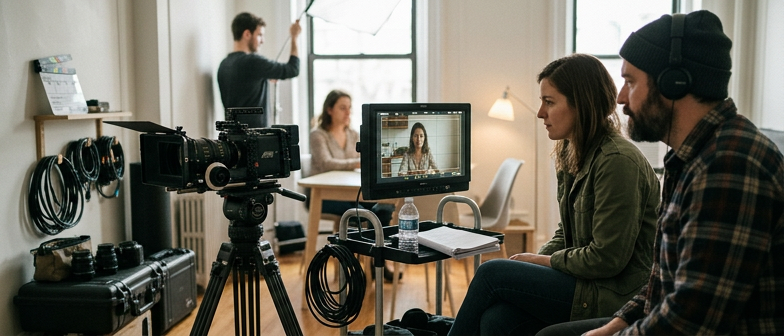
Blocking is the planned movement of actors and the camera so every moment supports the story. Within film scene composition basics, it connects performance, framing, and camera position into a single plan. A practical approach starts with the script: identify emotional beats, decide where characters stand or sit in relation to each other, then choose clear paths for entering, crossing, or leaving that suggest power, distance, or connection. As part of visual storytelling basics, the way people are placed and move in the frame quietly shows who matters, who feels isolated, and how relationships shift before anyone speaks.
After actor positions are sketched, the camera is blocked to follow or observe those moves clearly and without distraction. Each camera move should serve the overall composition, whether holding still to build tension or gently tracking to reveal new information. Directors and cinematographers walk the space with performers, then pick shot sizes and angles that protect eye-lines, avoid distracting shadows, and keep story details readable. By rehearsing this simple dance between actors and camera, the team builds a visual path through the scene that feels natural to watch and easy to cut, turning basic blocking plans into coherent screen storytelling.
Q&A
-
What is the main goal of film scene composition basics?
The goal is to arrange people, objects, and space so the audience instantly understands where to look, what matters in the moment, and how to feel about the action without needing extra explanation. -
How do framing techniques affect the audience’s experience?
Shot framing controls distance and emphasis: wide shots clarify context and relationships, while closer shots highlight performance and detail, guiding the viewer’s eye and emotional focus from cut to cut. -
What are the core shot types used in visual storytelling?
Filmmakers often move from an establishing wide shot, into medium shots for interactions, and then into close-ups to underline key emotional beats, creating a clear and readable progression for viewers. -
How do camera angles in movies shape a character’s perceived power?
High angles tend to make characters seem smaller or pressured, low angles can suggest authority or threat, and eye-level angles feel neutral, letting performance and blocking carry most of the meaning. -
Why is blocking important for lighting and shot analysis?
Consistent blocking lets lighting stay motivated and believable, helps compositions remain balanced, and makes it easier to analyze how each shot supports story beats, character relationships, and visual continuity.