Choosing and Organising Your Bag
Size, fit, and materials
For a short outing, a compact backpack or crossbody is usually enough. Aim for something big enough for a light jacket, water, snacks, and personal items, but not so roomy that you fill every corner.
A single main compartment with a couple of smaller pockets keeps things easy to find. If you use a tablet or slim laptop, a simple sleeve can help. Avoid very heavy frames, thick leather, or lots of metal hardware that add weight. Soft, lightweight fabric is usually more comfortable for walking and public transport.
Adjust the straps so the bag rests against your back. A bag that sits close to your body feels lighter and moves less when you walk.
Pockets as tools, not invitations to overpack
Pockets work best as access points, not extra storage. A small top or front pocket is ideal for your phone, keys, and tickets. An inner zip pocket can hold a wallet and a bit of cash, while side pockets suit a slim bottle or small umbrella.
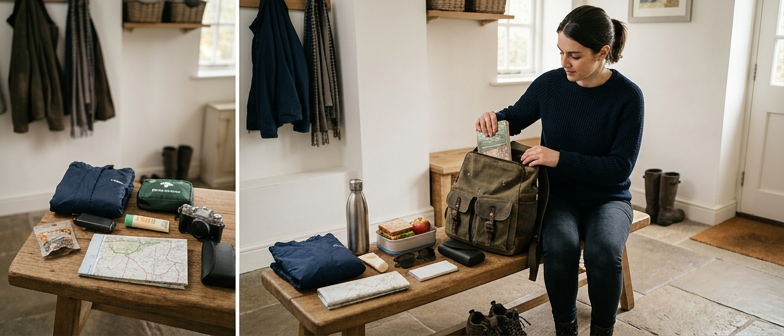
Decide what each pocket is for and stick with it. Place bulky or awkward items in the main compartment first. Then use softer items, like a scarf or spare layer, to fill gaps and stop things from shifting. If every pocket is packed to the brim, that is usually your bag telling you that something can stay at home.
Here is one way to think about different bag types for a short outing:
| Bag style | Best for | Trade‑offs and notes |
|---|---|---|
| Small backpack | Walking, public transport, long hours | Even weight on shoulders, more space, slightly bulkier |
| Crossbody bag | Urban errands, easy access | Quick reach for essentials, less comfortable when very full |
| Waist or sling bag | Minimalist outings, short walks | Very light, keeps valuables close, limited capacity |
Food, Water, and Small Comforts
Simple fuel that keeps you going
On a short trip, food is about steady energy and flexibility. Pack what you would normally eat over the same period at home, plus a little extra in case timing or plans change.
Mix slower and quicker energy. Common choices include sandwiches or wraps, nuts, trail mix, granola bars, and whole fruits that travel well, like apples or oranges. If you expect a longer or more active day, add a simple meal that can be eaten cold in a leak‑resistant container.
Think about how you will carry everything so it survives a full day in your bag. Reusable containers and small pouches help stop food from being squashed and make it easier to grab what you need. A compact insulated sleeve and a small ice pack help snacks stay more appealing when heat is a concern.
Hand wipes or a travel‑size sanitizer near your food make it more comfortable to eat on the go, especially when sinks are hard to find. Keeping these in one section of your bag also makes quick breaks easier.
Hydration and light extras
Water is often the difference between a relaxed outing and an uncomfortable one. For most local days out, a refillable bottle for each person is a sensible baseline, with extra if it is hot, if you are very active, or if water sources are uncertain. A larger container left in a vehicle, or a second bottle in your bag, gives you a buffer if plans stretch.
If you might refill from natural sources, basic treatment gear like a filter or purification tablets can be useful. Where taps are easy to access, a single lightweight bottle is usually enough, as long as you remember to top it up when you can.
A few small extras add comfort without much weight: tissues or a small roll of toilet paper, a compact towel or quick‑dry cloth, basic pain relief, a few plasters, lip balm, and sun protection. In buggy areas, a little insect repellent and soothing cream can prevent minor irritation from affecting everyone’s mood.
Small morale boosters also earn their place. A flask with tea or coffee, a bit of chocolate, or a favourite savoury snack can make a long bus ride or a late return feel much kinder.
Dressing for Changeable Conditions
Layering instead of chasing one perfect outfit
Being comfortable outdoors on a short trip often comes down to layering. Think in three steps for your upper body: a breathable base layer close to the skin, a light mid‑layer for warmth, and a thin outer shell that cuts wind or drizzle.
If the morning is chilly, wear all three. When the sun comes out and you warm up, take off the mid‑layer or shell and roll it into your bag. As evening cools again, pull one piece back on. The same idea can work for your legs by pairing regular trousers with packable leggings or tights.
Fabrics that dry quickly and stay comfortable when slightly damp are often more practical than heavy cotton. Thin fleece and light synthetic shells usually pack down small, making it easier to carry a “just in case” layer.
Footwear and small weather helpers
Feet often decide how long you actually want to stay out. Closed shoes that are comfortable for walking and can cope with light rain are usually enough for most short outings. Cushioned socks add comfort and help reduce rubbing. If the forecast is cooler or wetter, consider warmer socks and a spare dry pair in your bag.
A few compact extras help you cope with changing conditions. A foldable rain jacket or tiny umbrella covers brief showers without dominating your bag. A light scarf, buff, or bandana protects your neck from sun or wind, and doubles as extra warmth in a draughty train or café.
Sunscreen, lip balm, and a small snack round out your weather kit so you can stay outside long enough to enjoy the day rather than rushing home because you feel tired, cold, or sun‑exposed.
Safety, Tech, and Personal Essentials
Health and safety items that quietly prevent problems
A small pouch for health and safety items can stop minor issues becoming big interruptions. Start with any regular medication you need, in the amount you expect to use plus a little margin. Add a couple of general pain relievers, motion‑sickness tablets if you are prone to it, and any allergy medicine you rely on.
A few plasters, antiseptic wipes, and any personal supplies such as feminine products or specific creams can help you handle small problems quickly. Travel‑size hand sanitizer or antibacterial wipes are useful before eating or after using busy restrooms.
If your day involves extended time outdoors, compact sunscreen and insect repellent are usually worth their space, even when the sky looks overcast. Lip balm, tissues, and a mini deodorant also sit in the category of things you may not need but appreciate when you do.
To keep this kit from taking over your bag, it can help to group items by how often you use them:
| Item group | Examples | How to pack it |
|---|---|---|
| Use often | Tissues, lip balm, sanitizer | Front pocket or top of main compartment |
| Use occasionally | Plasters, pain relief, allergy tablets | Small inner pouch |
| Rare but important | Motion sickness tablets, insect repellent | Tiny dedicated pouch at bag bottom |
Tech, documents, and small comforts
Tech for a short outing does not need to be complicated. For many people, a phone, earbuds, and a compact power bank cover the basics. A charging cable and, where needed, a small adapter help you top up devices if you find an outlet. If you wear glasses, carrying a spare pair or at least a cleaning cloth can prevent a lot of frustration, and sunglasses are handy even in mild weather.
To avoid digging around, place these items in one clearly marked pouch or pocket so you do not have to pull out food, clothes, and safety items just to find your cable or earbuds.
Comfort and personal items can stay simple, too. A reusable bottle, a light snack, and a small hand cream or balm go a long way during long rides or queues. A slim wallet section or document sleeve for cards, identification, and a little cash keeps essentials secure yet easy to reach. For longer journeys by bus, train, or plane, earplugs or a soft eye mask may help you rest without adding noticeable weight.
Putting all of this together, the goal is not to carry everything you might possibly need, but to create a compact, flexible setup you can grab on short notice. Over time, paying attention to which items you actually use makes it easy to refine your bag so each outing feels lighter, calmer, and better prepared for small twists in the day.
Q&A
-
What are the core “Day Trip Packing Basics” for most short outings?
For most day trips, focus on water, simple snacks, a light extra layer, basic hygiene items, and your key documents or payment methods. Combine these with a small safety pouch and minimal tech. The goal is coverage of hunger, temperature, comfort, and navigation without duplicating what you can easily buy locally. -
How can I build a “Lightweight Bag Essentials” kit that works year‑round?
Create a permanent core kit: compact tissues, sanitizer, pain relief, plasters, lip balm, a charging cable, and a tiny power bank. Keep it in a dedicated pouch that moves between bags. Around this, rotate seasonal pieces like sunglasses, gloves, or a sun hat so your day bag stays lean but always functional. -
What “Weather Ready Travel Items” matter most for unpredictable forecasts?
Prioritise a packable shell, a small umbrella, and quickly drying accessories like a buff and thin socks. Add mini sunscreen and a pocket‑size insect repellent for sunny or buggy conditions. These few items handle wind, drizzle, sudden sun, and cooler evenings without turning a short local outing into a fully loaded hiking pack. -
Which “Short Journey Comfort Tips” make buses, trains, or car rides easier?
For short journeys, combine ergonomic packing with small comfort boosts. Keep your heaviest items close to your back, and keep snacks, water, and earbuds easy to reach. A soft scarf doubles as a pillow or blanket, while earplugs and a tiny hand cream reduce sensory fatigue and dryness in air‑conditioned spaces. -
How do I use a “Practical Travel Checklist” for better Weekend Travel Organization?
Build a reusable checklist split into categories: bag, clothing, comfort, tech, and documents. Start with your proven day‑trip set, then add only items specific to the weekend, like sleepwear or chargers. After each trip, cross off anything unused and remove it next time, gradually refining the list until packing becomes almost automatic.